|
|
Soil texure explained
|
|
We take soils very much for granted without ever considering what goes to make up a soil. A simple test is to fill a glass cylinder to a third with your ordinary garden soil, a jar will do. Then fill it to the top with water. Stir up the lumps until all the crumbs break down and you end up with mucky slurry. |
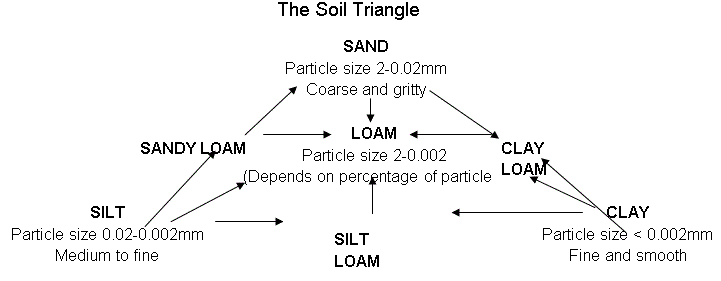
Allow it to stand a day until the water clears and all the solid matter sinks to the bottom. Then look closely. The largest particles will have sunk to the bottom and the finest material will be at the top of the column. We have allowed the soil to settle into grades of particle size. The largest particles will be sand and stones, followed by silt and then clay at the top. The proportions of each of these soil fractions determine soil texture and its properties.
Soils are developed over thousands of years by the breakdown of rock on the surface of the earth by weather. Soils are complicated mixtures of mineral matter (sand, silt and clay), water, air, organic matter (the remains of plants and animals) and organisms that live in the soil.
|
Few of us ever think about soil types when we buy a house and garden or take on an allotment. We move in and then do what we can with the soil we have. An understanding of soil characteristics will help us work with our soil and remedy its shortcomings.
Sandy soils drain easily and nutrients are easily washed away, they warm quickly in spring and are considered an ‘early’ soil but cool quickly in the autumn. They are light and easily worked. Silt soils retain water and hold nutrients more easily. Clay soils drain slowly, contain little air and are slower to warm in spring but retain warmth in autumn and hold nutrients.
By far the best soils are loams. Their mix of different size particles allow them to drain freely, hold nutrients, are well aerated and ideal for cultivation.
In a garden situation, there are things we can do to improve the soils we have. Adding large amounts of composted material, as well as providing nutrients will have a beneficial effect on most soil types. Humus will hold together sand particles to form a good crumb structure that will hold water and provides air spaces in clay soils to improve drainage. Adding lime to clay soils, as well as altering pH, will cause clay particles to clump together to form the desired crumb structure, improving aeration and drainage. By looking more closely and understanding the texture of our soils, we will be able to use our land effectively and make up for any disadvantages it may have.
Gardening Advice Center Share with us your gardening experience!
|
|