Categories
Calendars
Guides
Reviews
Archive
Gallery
Articles
Ask Our Gardening Expert
How To Take A Semi-Ripe Cutting
A semi-ripe cutting is taken from this year's growth - the tips are new tender
growth, with the lower part of the cutting being older and harder
growth. This method of propagation is common for most shrubs (not
evergreen). Some common examples are choisya, lavender, philadelphus
(mock orange), potentilla and weigela.
Cut off the soft new growth at the top
of the shoot just above a leaf joint. The ideal cutting should now be
about 5-10cm (2-4in long).
STEP 2
STEP 4
The best time to take a semi-ripe cutting is normally in mid to late summer - potentilla fruticosa
cuttings should be taken a little later in the year - early autumn is ideal.
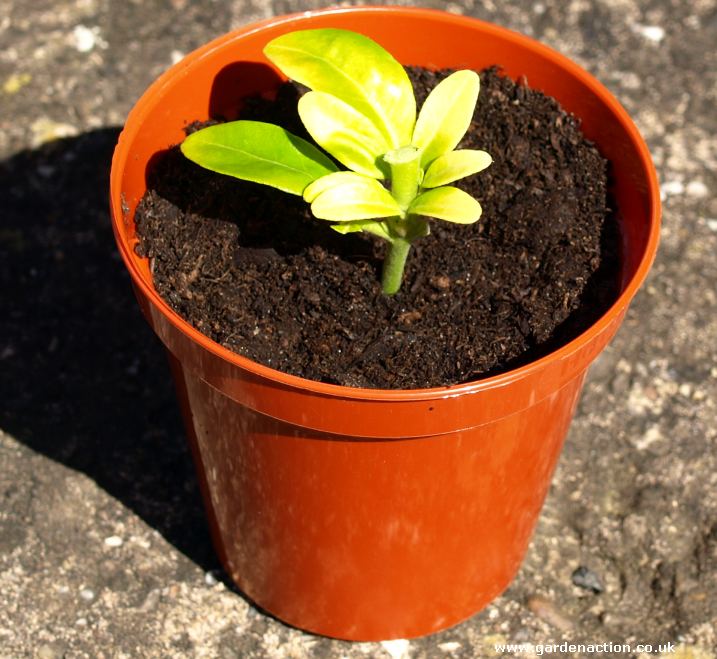
For each cutting, fill an 8cm (3in) pot with potting compost. Dip
the base of the cutting in hormone rooting powder, make a small hole in
the compost and insert the cutting into the hole to about a third of
its length.
Firm the compost down around the cutting. Water well.
 STEP 3
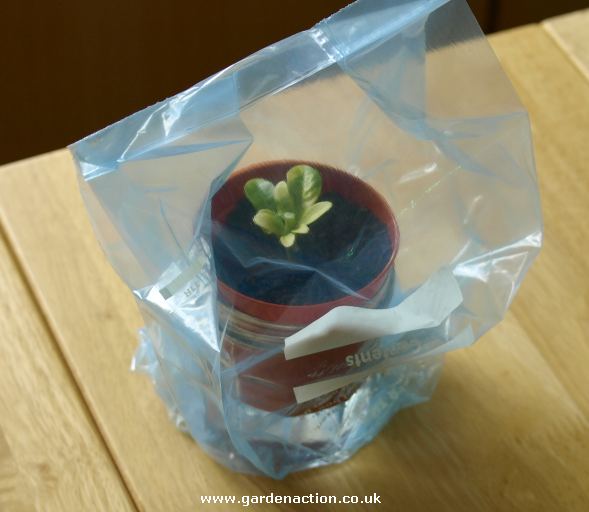
To prevent the cuttings loosing too much water. place the pots in a small
propagator with the vents closed. Alternatively, cover each pot with a plastic bag
kept off the cuttings by wire hoops inserted into the compost. Place the cuttings in
a warm, draught free place which is always out of direct sunlight. A propagator is
ideal or against the house wall.
The cuttings will have rooted in a month or so. At this stage,
harden them off over a week or two to the normal weather. During the
winter, the plants need the protection of a cold frame or unheated
greenhouse. The plants can be planted in their final positions next
spring.