Categories
Calendars
Guides
Reviews
Archive
Gallery
Articles
Ask Our Gardening Expert
How To Deal With Rust
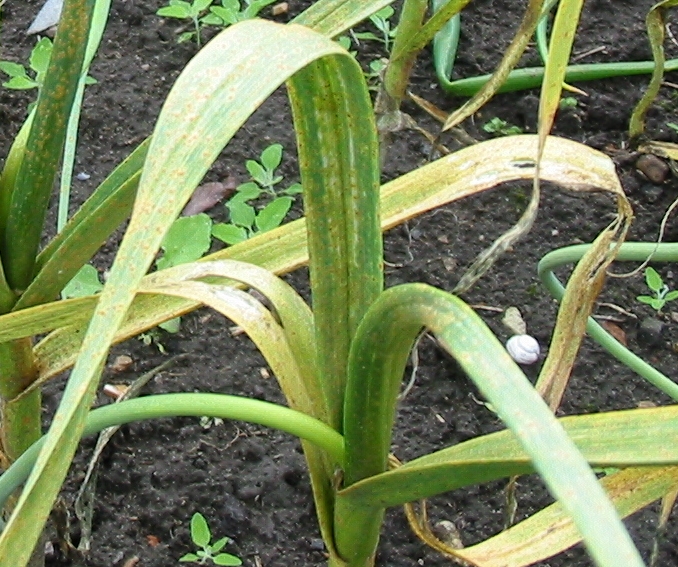
Rust can affect a variety of plants including
fuchsias, roses, chrysanthemums, pelargonium, garlic, onions,
leeks and broad beans. Rust is a fungal disease.
How to Treat Rust
As soon as rust is noticed, remove all affected leaves and burn
them. Try to isolate infected plants from healthy ones. The
infection spreads through the air via spores. The conditions
needed for rust are wet leaves at the right tempearature. The plants should be sprayed with a fungicide such as thiram, maneb
or zineb at ten day intervals. GO
TO THE GARDEN PEST AND DISEASE MAIN PAGE FOR
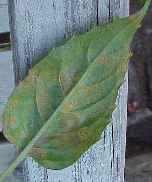 Rust
Rust
Pucciniastrum epilobi - this appears as raised, round
rust coloured spots on the underside of leaves.
Hygiene is the best way to prevent rust - ensure all fallen leaves are
removed from the top of the soil before they begin to
decompose. Prune the plants to ensure a free circulation of air,
especially at the centre. Remove and burn all infected leaves
from the plant.
PESTS AND DISEASES CLASSIFIED BY PLANT