Categories
Calendars
Guides
Reviews
Archive
Gallery
Articles
Ask Our Gardening Expert
The Coast Live (or California Live) Oak
The Coast Live Oak (sometimes called the California Live
Oak) produces a magnificent specimen tree with a typically oak
tree shape. It is unusual for an oak tree because it is evergreen. Coast Live Oak (quercus agrifolia var. oxydenia) The tree grows to
around 20 meters high at maturity which can be as old as 250
years. The Coast Live Oak is classified as a red oak.
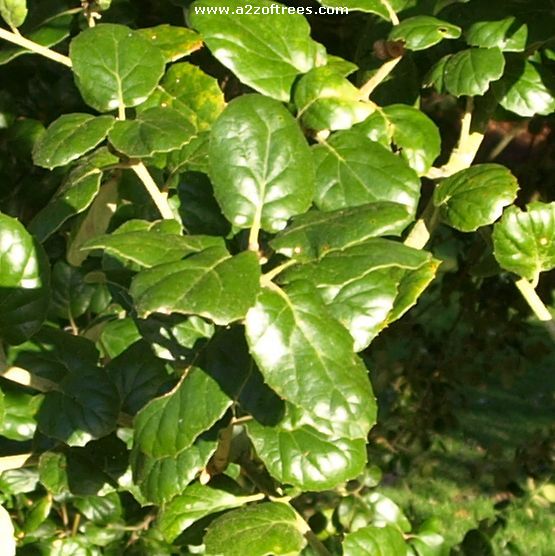
The leaves are a glossy green colour and not like the traditional
oak leaf in shape. About 5cm (2 in) long by 3cm wide (1 in) the
leaves have thin-toothed edges which become sharper with age. The male flowers are thin catkins around 7cm (3 in) long, whereas
the less obvious female flowers are tiny balls grouped together on
short stems. Both are produced in April time. The pollinated female
flowers turn into rather elongated, red acorns in October of the
same year. This is unusual for red oaks, the acorns are normally
produced over two years.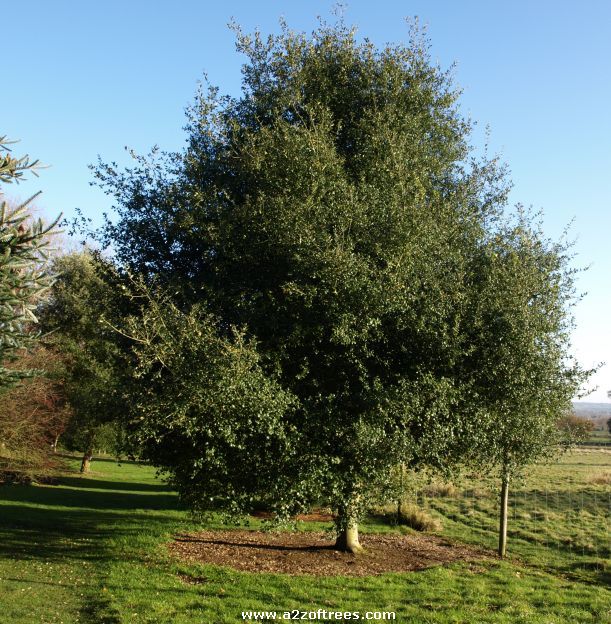
Coast Live Oak, click to enlarge
The Coast Live Oak is native to southern parts of North America and
northern parts of South America. It is also found in parks and
arboretums across North America and Europe.