Categories
Calendars
Guides
Reviews
Archive
Gallery
Articles
Ask Our Gardening Expert
Northen Pin Oak (quercus ellipsoidalis)
Northern Pin Oak (quercus
ellipsoidalis) Do not confuse this tree with the Pin Oak which is a different species of
oak tree.
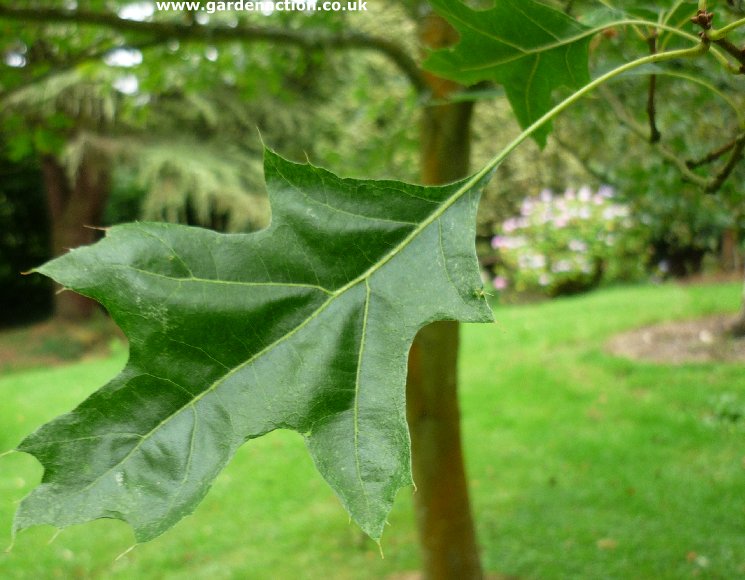
The leaves are a semi-glossy dark green which turn bright red in
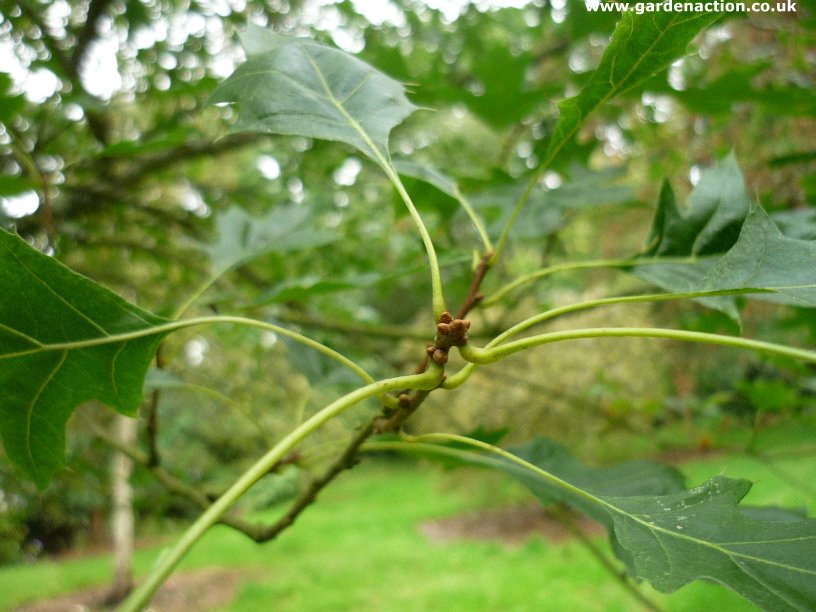
autumn /fall. There are two to five deep lobes with pointed ends to them. The leaves
are 6 to 13cm (2� -5in) long and narrower. Each leaf is held on a long stem.
The bark is generally less lined compared to other oaks and the
lower part of the stem often shows sign of low branches which have died and fallen
off (see left). The wood is infrequently used.
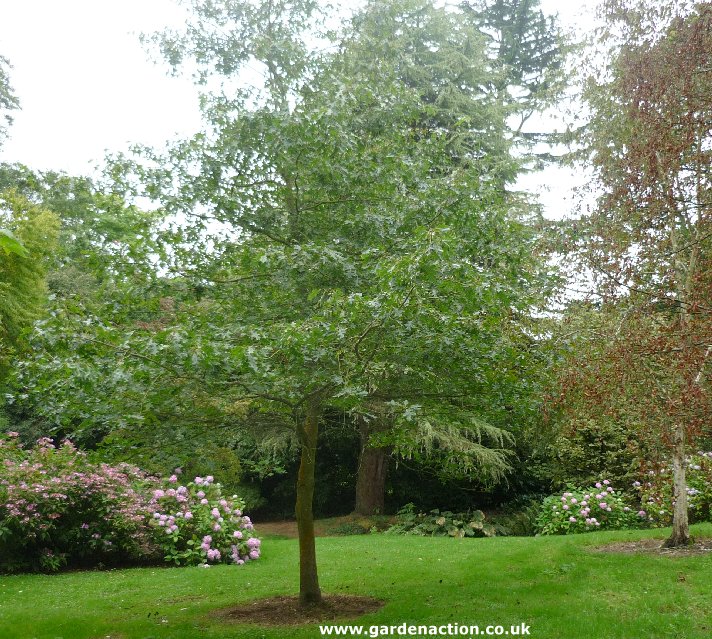
Nuttall Oak, click to enlarge
The Northern Pin Oak is native to the northern United States and southern Canada. It is
unlikely to be found in Europe apart from specimen trees in arboretum.
One of the smaller of the oak trees, it reaches a maximum height of
20m (65ft) at maturity. The Latin name quercus
ellipsoidalis comes from the shape of the acorns which are thinner compared to standard
acorns. This tree is often planted as an ornamental because of its autumn leaf colour and
its ability to grow well in barren sandy soil.