Categories
Calendars
Guides
Reviews
Archive
Gallery
Articles
Ask Our Gardening Expert
How to Plant Raspberry Canes
When
and How To Plant Raspberries Most soils are suitable for raspberries, but a little preparation
will pay rewards, especially because they will remain in the
same position for 10 to 12 years. Dig a row 30cm (1ft) deep by
1m (3ft) wide, working in as much well rotted compost as
possible. Where more than one row is being planted, allow 1.7m
(5ft) between rows in order to let the roots spread freely and
give room for you to harvest the crop in summer.
Place the plants in the trench about 45cm (18in) apart, and cover the
roots with soil 5cm (2in) above the existing soil mark on the
stem. This will encourage more vigorous rooting. Work a handful
of
bonemeal
per square metre (3ft) into the surface of the soil. Firm down the soil by lightly treading it down and water
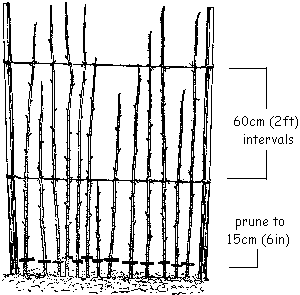
if the soil is not moist. Finally, cut the plants to 15cm (6in) from the ground as shown in the
diagram above. This may seem a bit drastic but if the correct
pruning for the first year is not carried out, the plants will be seriously weakened. Autumn fruiting raspberries do not require strong
supports, and therefore do not need to be planted in rows. Simply
devote an area to them and let them grow as they want. The plants
will mostly support themselves with only the odd bit of help from
some sticks in strategic positions.
How to Plant Raspberry Canes
October
is the best month to plant raspberries, although
planting can be done any time up to
March
if the weather and
soil conditions are correct.
 Summer
fruiting raspberries (the most common for gardeners) will
require support during the growing season. Put the support poles
and wires in place after digging, but before planting. Secure
two 2.2m (7ft) poles in the ground at either end of the row. Tie
two or three horizontal wires at 60cm (2ft) intervals to the
poles. Tie the plants loosely to the wires when they begin to
grow.
Summer
fruiting raspberries (the most common for gardeners) will
require support during the growing season. Put the support poles
and wires in place after digging, but before planting. Secure
two 2.2m (7ft) poles in the ground at either end of the row. Tie
two or three horizontal wires at 60cm (2ft) intervals to the
poles. Tie the plants loosely to the wires when they begin to
grow. 
Name: tiffani
E-mail:
Date posted: January 12, 2011 - 09:44 pm
Message: i live in phx arizona and my biggest concern with raspberry plants is how much direct sunlight shoutld they be exposed to during our hot summer months