Categories
Calendars
Guides
Reviews
Archive
Gallery
Articles
Ask Our Gardening Expert
How to Feed, Water and Support Tomatoes
Tomato Transplanting Where tomato plants have been grown under cover, remember to
harden them off for a week or two before planting them in their
final outside positions. This is especially important in the UK because May and
June can often be cool and windy. For more details on how to harden off
plants,
click here. For each plant, dig a hole (45cm / 18in apart) in the bed to
about 5cm / 2in deeper than the pot and water if conditions are at all dry. Ease the tomato plant out of
the pot, keeping the root ball undisturbed as far as possible. Place it
in the hole and fill around the plant with soil. The soil should be a
5cm / 2in higher than it was in the pot. Planting tomato plants deeper in the soil than
in the pot will encourage the formation of additional roots. Loosely tie the plant's stem to the support stake using soft garden twine -
allow some slack for future growth.
Just before transplanting the tomato plants to their
final position drive a strong stake into the ground 5cm (2in) from the
planting position. The stake should be at least 30cm (1ft) deep in the
ground and 1.2m (4ft) above ground level - the further into the ground
the better the support. The culture of container grown tomatoes is not very different from other
methods. The soil used for containers is best half potting compost
and half a soil-based type loam - this gives some weight to the soil which helps
the stakes to remain in place and stop winds blowing over the container.
The plants will need more frequent watering to keep the soil moist, and will
require feeding with a liquid tomato fertiliser once a week starting
when the first fruits start to form. Weeding, feeding, watering and support are the main needs of tomato
plants.
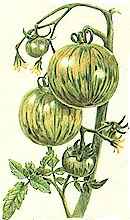
Each one of these is dealt with separately below. Watering Feeding and Weeding Green Zebra - super taste and unusual appearance
Tomatoes have two separate areas of the roots. The top
area is specialised to take up nutrients in the water they absorb. The
lower parts of the roots absorb water but are less able to absorb
nutrients. You can make use of these specialised roots to grow healthier
and more prolific tomatoes with a simple technique.
Click here to find
out more. Support CLICK
HERE FOR NEXT TOMATO PAGE

How to Feed, Water and Support Tomatoes
Where tomato seedlings have been started in pots, they should be transplanted into
their final positions when they are at least 15cm (6in) high.
How to
Support Tomatoes
Growing
Tomatoes in Grow Bags or Containers
Care
of Tomato Plants
A constant supply of moisture is essential for tomatoes - dry periods
significantly increase the risk of the fruit splitting. Tomatoes don't
like being water-logged, but neither can they stand dry conditions.
 Growing
outside in the UK, tomato plants should be fed with a liquid tomato fertiliser every
two or three weeks up to the end of
August. These tomato fertilisers are
high in potash which the plants needs to fruit well. In
September, feed
with a general fertiliser (higher in nitrogen) in order to help the
plant support its foliage. Weed around the plants to discourage pests
and diseases. A mulch of well-rotted compost will help retain moisture
and prevent weeds.
Growing
outside in the UK, tomato plants should be fed with a liquid tomato fertiliser every
two or three weeks up to the end of
August. These tomato fertilisers are
high in potash which the plants needs to fruit well. In
September, feed
with a general fertiliser (higher in nitrogen) in order to help the
plant support its foliage. Weed around the plants to discourage pests
and diseases. A mulch of well-rotted compost will help retain moisture
and prevent weeds.
As the plant grows, tie in the main stem to the support stake. Check previous ties to ensure that they do not cut into the stem as the
plant grows.
Tomato
Home Page
Name: helen
E-mail: wcl_uk@yahoo.com
Date posted: June 11, 2011 - 10:08 am
Message: hi are growing brandy wine varriety but know or heard nothing of these seem to be doing fine any info plesae
Name: Eleanore
E-mail: Private
Date posted: May 17, 2011 - 12:48 pm
Message: Are patio tomatoes small like the cherry or grape.The stems are real stocking so I'm thinking they are little salad tomatoes,am I right?
Name: Howard Bell
E-mail: strakerbell@hotmail.com
Date posted: May 11, 2011 - 04:20 am
Message: Hi I have just built a greenhouse and I am growing some Tomatoes, they have lots of flowers on them. Do I need to polonate the flowers to get the fruit, i.e. with a feather or something similar?
Name: erol kus
E-mail: eroll1907fb@msn.com
Date posted: December 13, 2010 - 08:22 pm
Message: i had a blight problem last year.in the same area ifI growe in polytunnel will I have same problem,many thanks
Name: Ken Lord
E-mail: kenlord@sky.com
Date posted: August 29, 2010 - 03:57 pm
Message: I have three tomato plants in a gro bag growing in a wall plastic greenhouse. They have fruited well and now starting to ripen. I have been feeding with Tomorite since the first fruit appeared. My question is WHEN DO I STOP FEEDING THEM? Tips please!
Name: kspaven
E-mail: kspaven@fsmail.net
Date posted: August 27, 2010 - 04:50 pm
Message: my tomatoes in the greenhouse will not ripen. plenty of fruit but despite watering,feeding and careful attention they will not go red.any tips or help appreciatted