Categories
Calendars
Guides
Reviews
Archive
Gallery
Articles
Ask Our Gardening Expert
How To Choose Fuchsias
Choose fuchsia plants with: an even symmetrical shape good green leaves from green (not brown and woody) stems good root system - turn upside down and tap out from the pot to examine them several shoots from the lower part of the main stem Avoid fuchsia plants with: uneven growth aphids, white fly or rust - beware most of all of rust (see pests and diseases section)! incorrect pot size - it should be roughly 35% pot, 65% visible plant signs of lack of water
How To Care For Fuchsias
Even if you plan to propagate your own fuchsias, you need to start with a few plants
acquired from a garden centre, online or friends. When examining the plants,
size is not too important, smaller healthy plants will soon catch up and
even overtake larger less healthy ones.
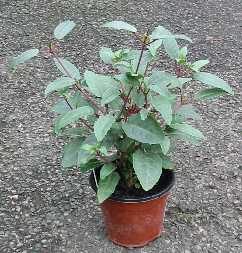 An excellent choice of fuchsia on the left - it exhibits all the
qualities listed below and it just looks healthy. This particular cultivar is 'Winston Churchill'.
An excellent choice of fuchsia on the left - it exhibits all the
qualities listed below and it just looks healthy. This particular cultivar is 'Winston Churchill'.
Name: Dave
E-mail: mw0mwl@yahoo.co.uk
Date posted: January 02, 2011 - 07:58 pm
Message: I've been growing fuchsias for over 30 years some for the show bench and for leisure, my favourites are the single cultivars the doubles are brilliant to look at but you get fewer blooms because it takes the strength out of the plant, I read one of the questions about keeping fuchsias in the house during the winter, fuchsias do not make good house plants because the atmosphere is too dry where fuchsias require a hunid atmosphere, the first thing that will happen is the the leaves will lose their lusture then the blooms and the buds will drop off and then the leaves will go limp, as well as this there is a chance that red spider will be a problem because red spider thrive in a dry atmosphere, so if you can't over winter your plants bury them in the garden at least 8 to 10 inches deep but don't forget to mark the spot where you have buried your plants, dig them up in about march or when the ground is workable.