Categories
Calendars
Guides
Reviews
Archive
Gallery
Articles
Ask Our Gardening Expert
Growing Brussels Sprouts (continued - page 3)
Harvesting Brussels Sprouts As the season progresses, remove any leaves towards the base of the
plant which turn yellow - they can be a source of infection if
left in place. When harvesting is complete, the stem can be cut
into pieces and put on the compost heap. It is possible possible to encourage the early formation of larger
sprouts by cutting off the top of the growing tip (2cm or 1in)
in
September. However, this may mean that the sprouts are less
likely to be subject to frost and it will certainly decrease the
number of sprouts for harvest. Pests
and Diseases of Brussels Sprouts
Aphids and flies occasionally affect the plants. Where this is a
bad infestation, the only real cure is spraying with chemicals
available from the local garden centre. Club Root can infect Brussels sprouts, it being a fungus in the soil.
The cause is almost always bad drainage, and there is no cure.
Brassicas should not be grown in this soil for five years in
order to eradicate the fungus completely. Click the picture to enlarge and see the
whole plant. Which Variety?
Varietiey
Crops
Comments
Brilliant F1
Sep - Oct
An extremely early variety with tasty sprouts. Some resistance to
powdery mildew.
Clodius
Millenium
Jan - Mar
An excellent late variety which has good frost and disease resistance. A
great tasting sprout as well. Mr Fothergills seems to have one of the best selections of Brussels
Sprouts,
click here to go there.
A hard frost improves the eating quality of sprouts. Remove them
from the main stem using a knife - simply breaking them off will
injure the main stem. Take the lowest sprouts first and work up
the stem as required. Do not remove all the sprouts from one
plant and then harvest from the next plant - the lower sprouts
mature earlier than the higher ones.
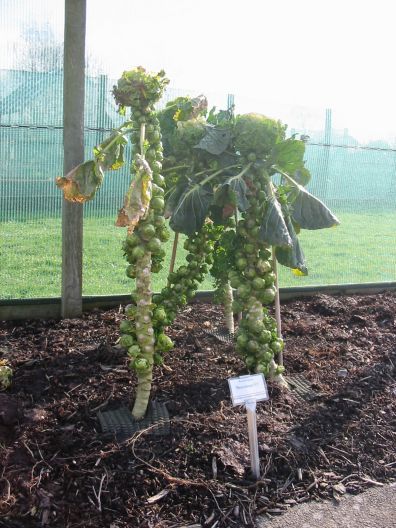
Brussels Sprouts have undergone a breeding revolution in the last five years with
many F1 varieties replacing what were previously firm favourites. Take Peer Gynt for
example, it's no longer commonly available. But the new varieties are more disease resistant
and produce firmer sprouts. A few of our favourites are listed below.
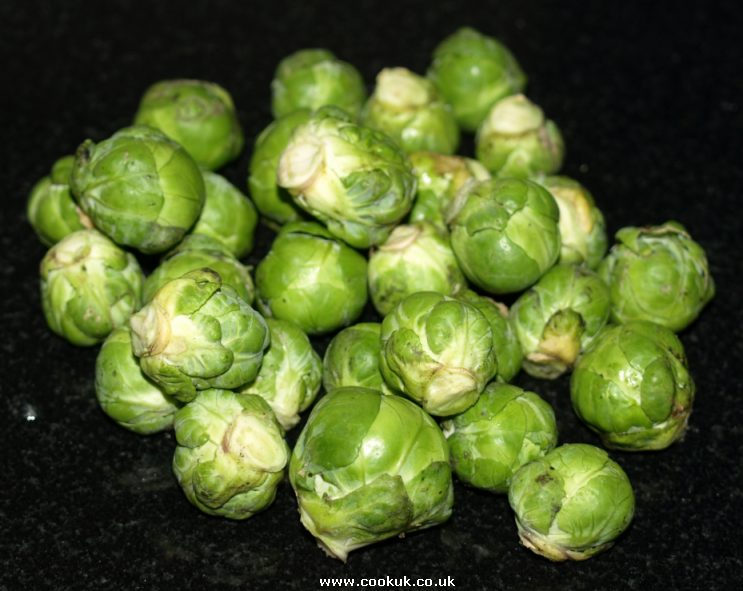
Nov - Jan
This our current favourite variety of Brussels Sprouts. When others on
the allotment were leaning over, Clodius stood up to the wind well.
It produces sprouts from November through to January. Disease resistance
appears excellent and the sprouts are firm and tasty.
Produces a crop from January to March.
END OF ARTICLE
Sprouts Home
Page Previous
Sprouts Page
Name: Christine Driessen
E-mail: driessencsb@gmail.com
Date posted: September 17, 2011 - 01:56 pm
Message: My first year. Several of the plants are very tall, 3 or 3 1/2 tall with big leaves, but no sprouts yet (I put the plants, not seeds, in our raised beds in the greenhouse around July 1. It is now middle of September. The ones in pots are short with lots of leaves. When do the sprouts begin appearing, or have I failed? Thank you!
Name: sue
E-mail: Private
Date posted: August 31, 2010 - 12:19 pm
Message: this is the first year i have grown brussel sprouts but they are infested with caterpillas. what advice can you give me?
Name: Sarah Charlton
E-mail: Private
Date posted: August 31, 2010 - 07:21 am
Message: It is the first year of growing Brussels, the sprouts are forming but then unravaling, why is this?
Name: tom
E-mail: tommal42@yahoo.ca
Date posted: August 14, 2010 - 02:12 am
Message: hi please can you help?
My sprout pants are developing clusters of yellow / honneycomp clusters. I took one off it smells like sprout but I dont think it looks right!
I am new to this so is it just the beginning of the sprouts growing or is it fungus or somethig worse?