GARDEN GREENHOUSE SELECTION: ALUMINIUM or WOOD?           Is an aluminium, plastic or wood greenhouse best for you? What are the cost comparisons and many other factors explained.
Go to pages about Selecting a Site For Your GreenhouseGo to pages about Selecting the Correct Greenhouse For Your NeedsGo to pages about Greenhouse Equipment - bench, capillary matting, heating, shade protection etc.Greenhouse manufacturers, retailers and suppliersGreenhouse plants index top navigation


Your weather dates have not been set. They have defaulted to medium settings.
Click here to set the weather dates to your area of the UK or USA.
 
Weekly Calendar
Vegetables
Fruit
Herbs
Trees
Help on the Allotment
Greenhouse World
Plants
The Perfect Lawn
Water Garden Features
Beginner's Corner
Pest and Disease
Veg, Fruit & Herb Calendars
Flower Garden Calendar
Garden Centres
Garden Techniques
Houseplants
Book Reviews
About GardenAction
Archived Newsletters
Arboretum, Parks &
Gardens
Garden Photography
Leftovers!
GardenAction's New Articles
Ask our Gardening Expert


 Garden Greenhouse Selection

Which is best, Aluminium or Wood? 

TOPICS IN SELECTING GREENHOUSES

  Wood or Aluminium?
  Glazing Type

Greenhouse Shape
Heating
Lean to greenhouses

Greenhouse Size and Use
Greenhouse Manufacturers


Wood or Aluminium Frame?
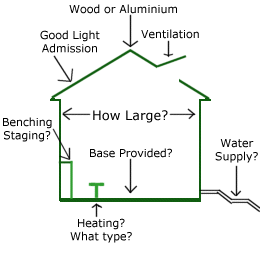
Over the last 20 years, aluminium has rapidly overtaken wood as the most popular form of construction for greenhouses. However, wooden framed greenhouses still have a couple of areas in which they are better than aluminium. 

The most obvious reason is that wood is considered by many to be better looking than aluminium. This alone is sufficient reason for many people to buy wooden greenhouses.

A second reason, not often appreciated, is that a well glazed wooden greenhouse is significantly warmer than the aluminium alternative. This means that wooden greenhouses are often cheaper to heat.

Types of Wood

Western Red Cedar greenhouse. Click picture to enlarge. Western Red Cedar (Thuja plicata) Possibly the best compromise for cost, strength and durability. Its only drawback is that it is not suitable for commercial greenhouses which require long lengths.

Typically Western Red Cedar is a medium strength wood (385kg per cubic metre or 24lb per cubic foot) with good resistance to decay. The wood itself looks great and can easily be treated with oil to make it look good for many years.

Baltic Redwood (Pinus sylvestris) Another good-looking wood, Baltic Redwood is strong (497kg per cubic metre or 31lb per cubic foot). This wood takes preservatives very easily making it long-lasting and it does not split when nailed.

British Columbian Pine (Pseudotsuga menzieii taxifolia) Similar to Baltic Redwood in strength, British Columbian Pine has a bulk/strength ratio of 529kg per cubic metre or 33lb per cubic foot. It's main drawback is that it does not take preservatives as well as other woods making it suspect as far as ageing is concerned.

Norway Spruce (Piceea varieties) This is the best choice where cost is the main consideration for a wooden greenhouse. Norway Spruce is a strong wood (variable 485 kg per cubic metre or 30lb per cubic foot) which takes nails very well. Its major drawback is that it needs to be treated well with preservative, and possibly painted if it is to age as well as some other woods.

Teak or Oak (and other hardwoods) The king of woods for greenhouses. The primary drawback is cost - hardwoods are very expensive and this trend continues as supply is becoming shorter as the years go by. Very strong (720kg per cubic metre or 40lb per cubic foot), very easy to work, very long lasting and delightful to look at.

Do note, that some manufacturers combine different woods in some greenhouses and this often can be very beneficial in getting low costs but long life.  

Aluminium
The first aluminium greenhouses did in fact corrode seriously. This problem has been solved for many years and although you will see powder form on modern aluminium greenhouses, this not a sign that they are seriously corroding.

Aluminium greenhouse - in green! Click to enlarge. Aluminium provides a very light and strong frame for greenhouses. The ability of aluminium to be formed into various shapes is a great advantage in greenhouse construction making aluminium a much cheaper alternative to wood. 

There are different types of aluminium although all those currently used give the same benefits. If you have decided on an aluminium greenhouse, the shape, size and sometimes glazing methods are the areas to consider most. 


GO TO NEXT PAGE or GO TO GREENHOUSES INDEX


Gardening Advice Center
Share with us your gardening experience!

Name:

E-mail:
   Make Private

Message:

Name: Ron
E-mail: Private
Date posted: September 16, 2011 - 10:19 pm
Message: I live metres away from the sea and have a small garden I would like to put a small garden approx 4feet x 6feet'base plastic greenhouse on. Should it be wood because of salt corosion? Any sugestions of makers of smaller size units? Appreciate yr advice. Regards Ron


Name: Jeannie Rubython
E-mail: Private
Date posted: June 19, 2011 - 06:30 am
Message: We have a secondhand green house (glass and aluminium) putting it back together was going fine until we found that the window has one side of the frame missing, so we need to buy a whole new window (2ft x 2ft). We do not know the manufacture, so can you offer any advice. Also having problems finding a rainwater kit that will fit the gutter, width needs to be 32mm. So far can only find 28mm and 38mm.

Hope you can help, thanks and regards Jeannie.


Links to Other Garden Sites || Privacy Policy ||

Copyright 2000-11 GardenAction. All rights reserved.